Multidimensional metallurgy

In last month’s blog I talked briefly about some of our core products and services. But sometimes, it’s our less obvious capabilities and willingness to go the extra mile that
can have the biggest impact on business operations. Such competencies are often in short supply with our competitors because they’re based around years of accumulated knowledge and industry understanding.
So this month I wanted to take a quick look at how our unique approach can add real
value… in some unexpected areas.
Many of you will know that we’ve always placed genuine importance on honesty,
integrity and putting the interests of our clients first. This way of working has resulted
in many longstanding customer relationships that are built on a foundation of mutual
trust. It’s the kind of environment that brings out the best in our team and ensures
that clients get the expertise and support they need.
Heres an example. We’ve worked closely with a leading organisation in the
aerospace and defence arena for a long time, and they recently asked us to help
them with a very specific issue, firstly as a sounding board and point of reference,
later in an advisory capacity. The organisation had taken a substantial delivery of
Kovar cryogenic chamber components from a large supplier and found that gas was
leaking across the batch during vacuum testing.
 A small crack was discovered in the material and the company asked our advice on
whether the fault was causing the leak, and to assess the potential risk of product
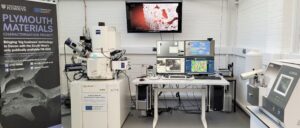
failure. On projects like this, we usually partner with Plymouth Electron Microscopy
Centre (PEMC) at Plymouth University. The sophisticated electron microscopy at the
Centre enables us to investigate material composition and structure under different
conditions at high resolution.
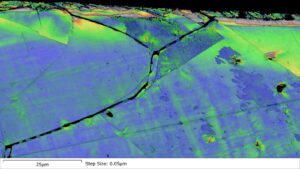
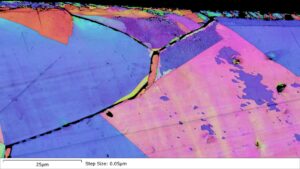 For this project, after extensive research and analysis using EDS and EBSD
technology, we were able to determine that the components were of sub-standard
quality; they’d been hot worked rather than annealed, which had resulted in
intergranular diffusion and the appearance of fissures. With the evidence we
provided, our client was able to secure a replacement delivery of the correct
specification product from their supplier.
This is just one example of the value that we can add in this area. As organisations look to update or modernise systems and components, we’re also increasingly being asked to help in reverse engineering projects where there’s a need to understand what’s happening inside various materials during particular processes.
Our collaboration with PEMC offers clients state-of-the-art research and analysis
facilities, which combined with our own expertise and experience delivers market-
leading insights.
Please get in touch if you’d like to understand how we can help with your project –
and don’t forget to click through next month for our April edition – a Technical
Release on Kovar…